
START WITH
Coverage
Know which systems and service categories need a specialist.
A practical field guide for new luxury homeowners
Vendor & Contractor Mastery
Build a clear vendor process for the home you have just taken on. Learn to map service coverage, compare proposals, set property-specific access and document the work from first call to close-out.
For homeowners managing a luxury property and the estate caretakers who look after it.

01 / THE FIRST VENDOR QUESTION
A new property can bring a roster of specialists, complex systems and access routines. The first step is seeing how the work fits together: which vendor covers each area, what a job includes, who approves a change and what the next caretaker should know.
This course gives those decisions a practical order, from property map to written scope to close-out record.
Know which systems and service categories need a specialist.
Clarify included work, access, approvals and useful checks.
Leave the next person a note about what changed and what remains.
02 / TEN REASONS
A good plan gives you a place to start, a way to check the scope and a record for the next visit. Here are ten decisions the course helps you prepare.
REASON 01 OF 10
Record the systems and service categories the home relies on, the specialist responsible for each, and any coverage gap that needs attention. A property map gives the next vendor conversation a clear starting point.

REASON 02 OF 10
Build a shortlist before a repair sets the pace. The course covers ways to find specialists, then compare their fit against the work your property actually needs.
REASON 03 OF 10
A repeatable interview makes it easier to compare what each candidate says about the job. Richard's 12-question interview lesson gives you a consistent place to start, then you can follow up on the details that matter to your property.

REASON 04 OF 10
Gather the license, insurance and contract information relevant to the work. The course helps you organize what to request and what to verify, then directs trade-specific and local questions to an appropriate qualified reviewer.
REASON 05 OF 10
Read the scope, exclusions, assumptions and price basis together. When two quotes cover different work, ask what would need to change before comparing the figures.
REASON 06 OF 10
The course treats negotiation as a conversation about options. Ask what changes with a different scope, schedule or material, then record the option the owner has approved.
REASON 07 OF 10
For repeat service, record what is included, how often the work happens and what standard the property expects. A service agreement and a repeat-visit record make it possible to compare the same property and scope over time.
REASON 08 OF 10
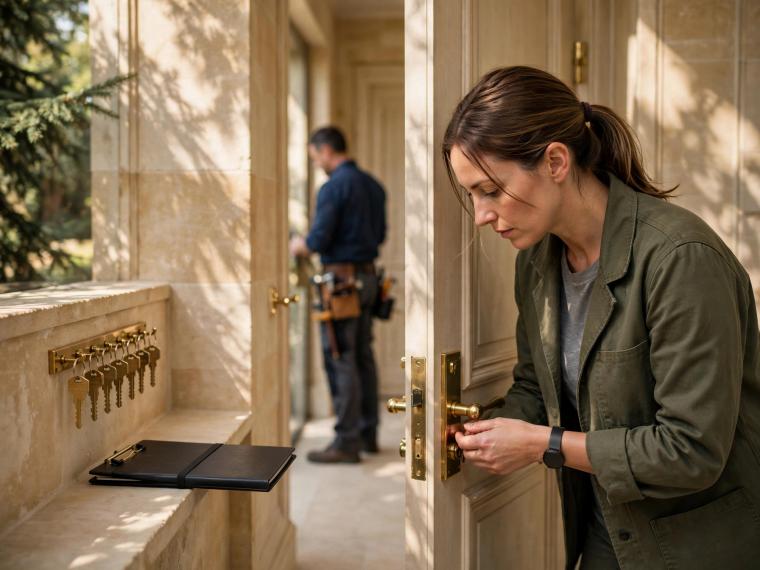
Agree on gate access, security routines, work areas and the points where someone will check progress. Clarify who may admit a vendor and who can approve a change to the scope.
REASON 09 OF 10
Note what was completed, what changed, how the change was approved, and which items remain open. Give each follow-up an owner and a date so the next caretaker can pick up the thread.
REASON 10 OF 10
Prepare an emergency call list and a seasonal maintenance calendar around the property's systems and local guidance. The course teaches a planning method, not one calendar for every estate.
THE COURSE / $47 USD ONCE
Five modules, 17 lessons, three downloadable field guides and student pilot access to Estate Care Fieldbook.
03 / TWO WAYS TO CARRY A JOB
These are working patterns, not promised vendor outcomes. The right level of review depends on the property, the scope and local requirements.
| Moment in the job | Reactive handling | Documented approach |
|---|---|---|
| Finding coverage | Search for a name when the issue appears. | Review the property map, then compare specialists against the defined scope. |
| Before work begins | Explain the job during a call or at the gate. | Share scope, exclusions, access expectations and approval path before arrival. |
| While work is underway | Decide what to do as new questions arise. | Agree on inspection points and record authorized changes. |
| At close-out | Rely on memory for what changed or remains. | Record observations, open items, an owner and a next date. |
| Between visits | Reconstruct the last service when another call comes in. | Refer to recurring schedules, the visit record and a seasonal plan. |

04 / EXPERIENCE BEHIND THE COURSE
Richard Barellano came into estate care through his mother, a housekeeper and caretaker for a prominent family. He brought a Hotel and Restaurant Management degree to the work.
In 2016, Richard became the full-time on-site caretaker for a private gated estate in Northern California. He has been there every day since. The property includes a two-story main house, guest house, studio, curved pool, full spa, tennis court, outdoor grill, koi pond and 13,800 acres of manicured boxwood landscape.
Vendor & Contractor Mastery is built from that experience, with lessons on finding specialists, reading proposals, managing on-site work and keeping useful records.
05 / COURSE AND FIELD TOOLS
Move from mapping your property's service coverage to vendor selection, contract review, on-site oversight and the next visit.
Review documented costs, map service coverage and define a standard a contractor can inspect.
Find specialists, use a consistent interview and organize the evidence to verify.
Read the full proposal, negotiate respectfully and put recurring work in writing.
Set access routines, agree on useful checks and document changes and close-out.
Keep an emergency list, review service records and plan seasonal maintenance.

INCLUDED DOWNLOADS / THREE PDF FIELD GUIDES
Use each guide to carry a lesson into a vendor conversation or property record.
PDF FIELD GUIDE 01
Organize the scope, candidate questions, evidence to verify, approvals and open follow-ups for one vendor and one trade.
PDF FIELD GUIDE 02
Compare repeat visits on the same property and scope while recording crew, access, season and other conditions. It offers a measurement method, not universal trade-time averages.
PDF FIELD GUIDE 03
Prepare a pre-start brief, agree on useful hold points and close out work with a clear list of evidence and owners.
INCLUDED / STUDENT PILOT ACCESS
Alongside the course and PDFs, your purchase includes student pilot access to the Estate Care Fieldbook. Use its current tools to keep vendor profiles, job plans, text observations, checklists and job history in one student workspace.
Fieldbook access is labeled as a student pilot. The page describes its available tools, not a proven student outcome.
Plan the workVendor profiles, job scope and duration
Record the visitTimestamped notes, custom checklists and private job history
Keep a scheduleRecurring visits, arrival logs and a printable monthly calendar
06 / BEFORE YOU ENROLL
Review what's included, how access opens and where the course stops. The purchase button takes you to the existing student account and checkout flow.
Both. New luxury homeowners can use the course to build a starting process for vendor coverage and job records. Estate caretakers can adapt the same methods to the property, their authority and the standards set by the owner.
You receive all five modules and 17 lessons, ongoing course access after payment is confirmed, three downloadable PDF field guides, and student pilot access to the Estate Care Fieldbook.
Create a student account from the enrollment button and complete the one-time Stripe checkout. Course access opens for that account after Stripe confirms payment.
The student pilot includes vendor profiles, job plans with scope and duration, timestamped text observations, property-defined checklists, private job history, recurring vendor schedules, caretaker-entered arrival logs, a projected monthly calendar and a printable month view. The Fieldbook is identified as a student pilot, not as evidence of course outcomes.
No. The Service Time Benchmark Guide gives you a method for comparing repeat visits on the same property and scope while recording conditions such as crew, access and season. It does not supply universal trade-time averages. The course helps organize vendor questions and records. Property-specific legal, insurance and trade decisions belong with the qualified professionals responsible for your situation.
VENDOR & CONTRACTOR MASTERY / COURSE ACCESS
One course for the decisions that shape estate vendor work, from the first property map to the close-out note.
ONE-TIME PURCHASE
$47USDGet the course Already enrolled? Sign in Course access opens after Stripe confirms payment.